Choosing the Right 2-Post Car Lift
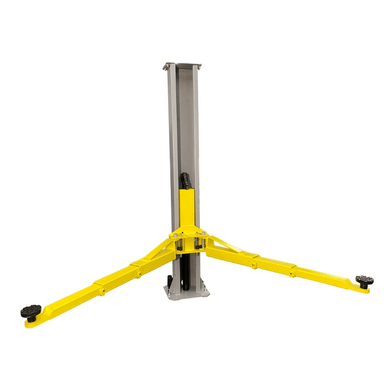
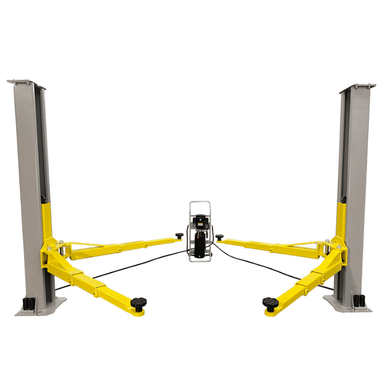
A 2-post car lift is one of the most versatile choices for vehicle repair and maintenance, providing wheel-free access and an open workspace underneath the vehicle. HeavyLift Direct carries 2-post lifts for home garages, professional repair shops, dealerships, fleets, and other commercial applications.
Can your truck be too front-heavy for a 2-post lift?
Even if your truck weighs less than a lift's rated capacity, uneven weight distribution can affect compatibility. Diesel pickups and heavy-duty trucks may place significantly more weight on the front axle. Learn why a truck can be too front-heavy for a 2-post lift and what to check before purchasing.
Choosing the right lift involves more than simply picking a weight capacity. Vehicle weight, wheelbase, lifting points, arm reach, ceiling height, available floor space, and concrete requirements can all affect which model is right for your application.
Will this lift fit my vehicle? 2 post lift fitment article
If you're deciding whether a 2-post lift is the right style for you, our 2-post vs. 4-post lift guide explains the differences. If vehicle storage or stacking vehicles is your main priority, you may also want to consider our 4-post car lifts.
Overhead vs. Baseplate 2-Post Lifts
Overhead, or clear-floor, 2-post lifts route cables and hydraulic lines above the vehicle, leaving the floor between the columns open. This provides an unobstructed workspace for oil drains, transmission jacks, toolboxes, and other shop equipment.
Baseplate, or floorplate, 2-post lifts eliminate the overhead crossbeam and route components across a covered plate between the columns. This can make them a good option for garages with limited ceiling height.
Neither design is right for every garage. Your ceiling height, vehicles, available space, and intended use should determine which configuration you choose. See our baseplate vs. overhead 2-post lift guide for a more detailed comparison.
Symmetric vs. Asymmetric 2-Post Lifts
You'll also find symmetric, asymmetric, and combination arm configurations. These designs affect how the vehicle is positioned between the columns and how the arms reach the vehicle's recommended lifting points.
Rather than assuming one design is always better, consider the vehicles you'll be servicing and the arm configuration of the specific lift. Our symmetric vs. asymmetric lift guide explains the differences in more detail.
Check Your Space, Ceiling Height and Concrete
Before ordering a 2-post lift, we recommend verifying three things: available space, ceiling clearance, and concrete.
Don't measure ceiling height alone. Garage doors, tracks, openers, lights, beams, and other overhead obstructions can affect which lift will fit. Overall lift width, column placement, drive-through clearance, and room to open vehicle doors should also be considered. Our 2-post lift space requirements guide can help you determine how much room you need.
Most 2-post lifts also need to be anchored to an adequate concrete slab. There isn't one concrete requirement that applies to every model. Slab thickness, concrete strength, condition, anchor specifications, and other requirements vary by lift.
Always check the installation manual for the exact model you're considering, and see our 2-post lift concrete requirements guide for additional information.
ALI Certified 2-Post Lifts
If ALI certification is required for your shop, organization, purchasing requirements, or application, look specifically for an ALI Certified lift model. Certification applies to individual lift models, not automatically to every lift produced by a particular manufacturer.
HeavyLift Direct carries both certified and non-certified options. Browse our ALI Certified car lifts if certification is an important part of your buying decision.
Why Buy a 2-Post Lift From HeavyLift Direct?
HeavyLift Direct is a family-owned equipment dealer that has sold thousands of vehicle lifts to customers across the country. We work with homeowners, professional repair shops, dealerships, fleets, schools, municipalities, and other facilities, and we carry lifts from multiple manufacturers across a wide range of capacities and configurations.
That experience has taught us that the right lift isn't always the one with the highest capacity or lowest price. It needs to work with your vehicles, your building, your concrete, and the work you plan to perform.
If you're unsure which 2-post lift to choose, contact us with your vehicle year, make and model, ceiling height, available floor space, and concrete information. Our team can help narrow down the options before you order.
Still deciding whether a 2-post lift is the right configuration for your garage or shop? Browse our complete selection of car lifts for garages to compare 2-post, 4-post, scissor, portable, single-post, and other vehicle lift options.